

How the program sells
Why everything starts with the cost of a signup
Our client sells the program in three steps. Someone sees an ad and signs up for a free webinar. After the webinar, they can book a one-on-one call.
So it all starts with the signup. If signups are expensive, so is every call that comes after.
And signups were expensive. From October 13 to 22, 2026, the old campaign brought in 73 signups for RON 2,882.72, which is RON 39.49 per signup. Out of every 100 people who reached the webinar page, about 12 signed up.
A quick note on the numbers. The client is in Romania, so the amounts are in Romanian lei (RON). On October 29, 2026, the National Bank of Romania rate was RON 4.79 to the dollar, so RON 100 is about $21. The screenshots come straight from the ad account, so amounts show in lei, and the ads themselves are in Romanian.
The old campaign
One ad was carrying the whole campaign
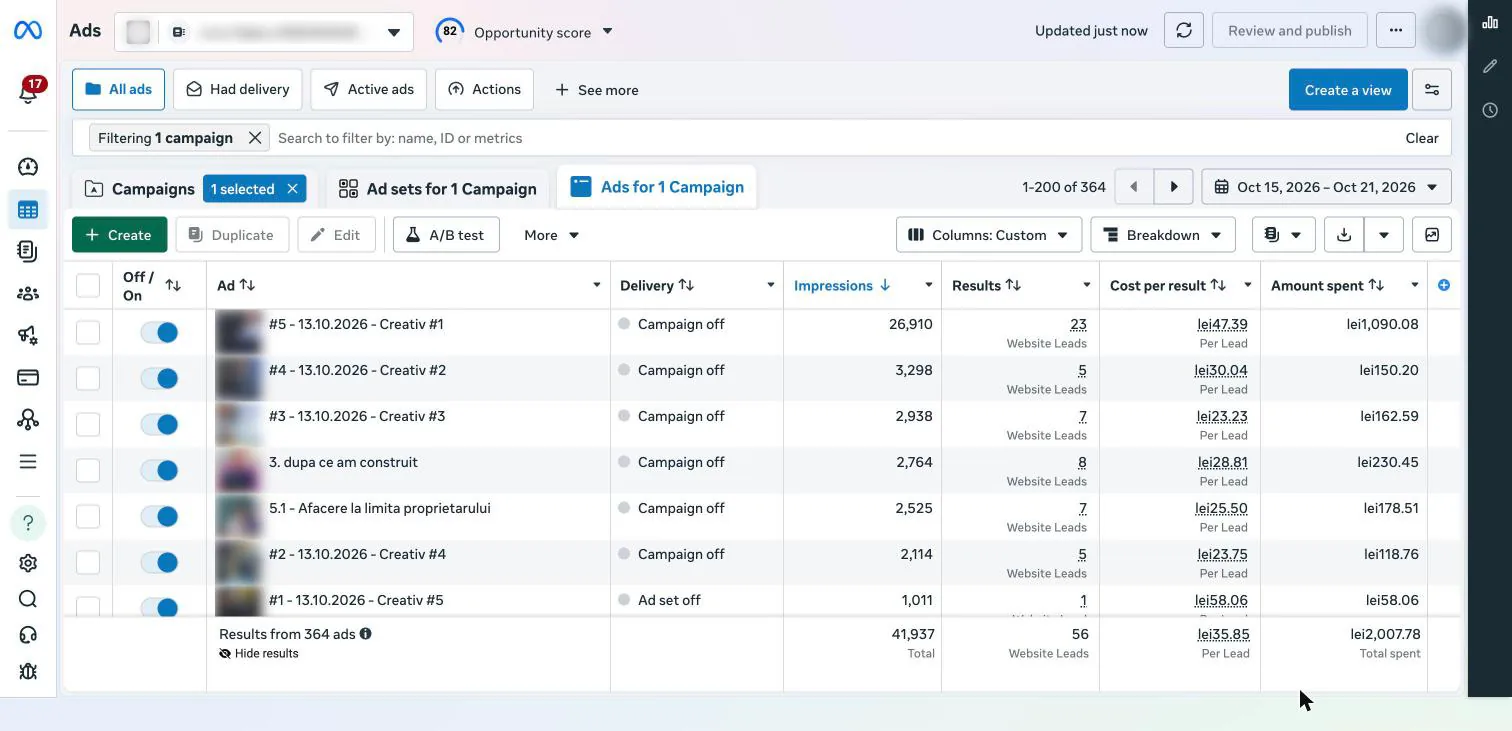
In the week of October 15 to 21, eight ads were running. Each one sat in its own ad set, with its own audience.
A word on “ad set,” since it'll come up again. The ad set is the part of your ad account that has a budget and an audience. Ads in the same set share the money, and Facebook gives more of it to the ones that bring results.
Of the eight ads, a single one took 54% of that week's spend. And a signup from that ad cost more than the campaign average.
The campaign had come to depend on one ad. It's like a business that lives off one big client: it works, but everything hangs on that client.
What we changed
Two ads for each trade, all in the same ad set
An accountant and a carpenter really have the same problem: the business doesn't run without them. But they don't put it in the same words. That's where we started.
- We studied each trade. The consultant works with accountants, custom furniture makers, commercial cleaning companies, dental labs, vinyl and aluminum window shops, auto repair shops, and others. We looked at what weighs on those owners and what a workday looks like for them.
- We made two ads for each trade. The image shows a moment from their work. The copy is written the way the consultant talks in his recordings.
- We put them all in one ad set, with the old campaign's audience. We didn't split the budget into small ad sets, and we didn't guess at interests for each trade. The ad names the trade, and Facebook finds the people who see themselves in it.
- We launched the campaign on the evening of October 22, with every ad approved.
- From October 26, the emails matched the ad. Anyone who signed up from a new ad got the emails written for that ad. The accountant got different examples than the carpenter, because each came in with a different problem.
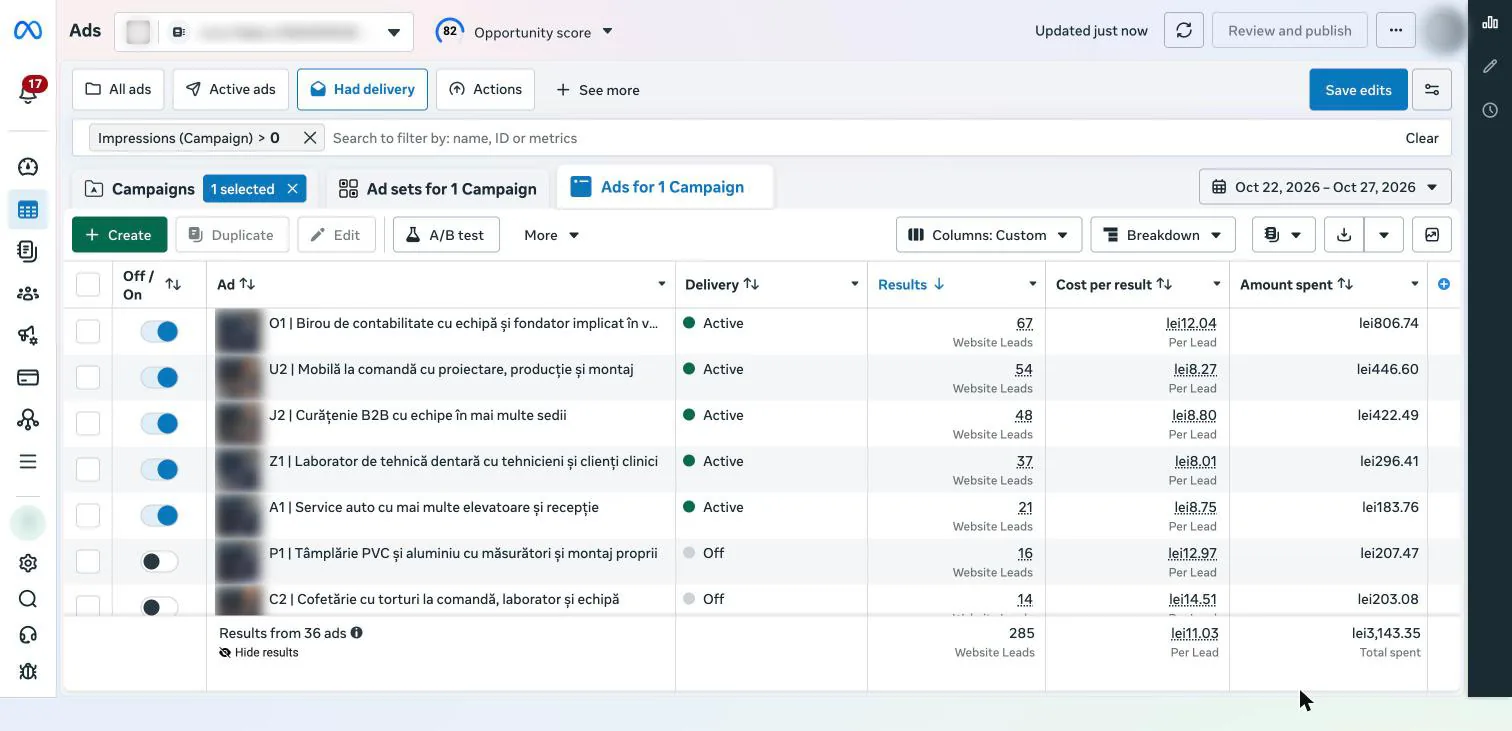
- After six days, we left the budget on five ads. Four of them, together, brought in signups below the campaign average. The fifth brought in the most signups and the most people who stayed at least 20 minutes into the webinar. We paused the rest, without deleting them.
- On October 28, in a separate campaign, we started a test with four new trades. Its results aren't part of this story.
Say you run an accounting firm. If the ad shows a moment from your workday, you know right away the webinar is for you, not for “small businesses” in general.

The results
What a signup cost, day by day
From October 22 to 26, the new campaign brought in 244 signups for RON 2,489.13, which is RON 10.20 per signup. That's 74% less than the RON 39.49 of the ten days before.
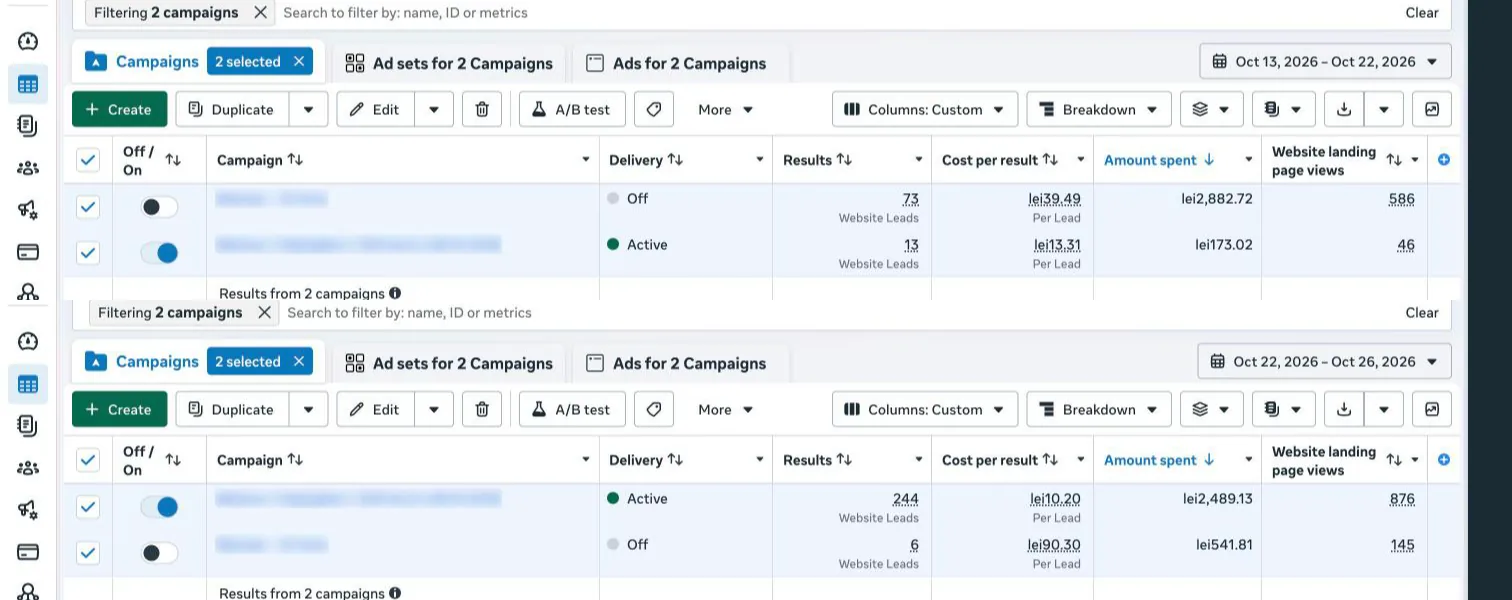
Same webinar. Same page. And yet out of every 100 people who reached the page, 28 signed up, compared with 12 before.
The page didn't change at all; the people landing on it did. The simplest explanation is that they saw their trade in the ad and arrived knowing what they were signing up for.
What a signup cost each day in October (RON)
old campaignnew campaign, from the evening of October 22
On average, RON 39.49 on the old campaign (October 13 to 22) and RON 10.20 on the new one (October 22 to 26).
Where did the money go? Facebook decided on its own. The ads for accounting, custom furniture, and commercial cleaning together took more than 60% of the spend.
It also decided on its own where to show the ads. Between October 22 and 26, it put 84% of the spend into the Facebook and Instagram feeds people scroll through.
Where Facebook put the money, by trade
Now for the honest part. The first days were the best. On October 25 and 26 the cost started to climb, and on the 27th it climbed more. Over the whole week, October 22 to 28, a signup cost RON 11.33. That's still less than a third of what it cost before, but more than in the first days.
One more thing, so you know exactly what the numbers show. These are webinar signups as Facebook counts them. How many of these people go on to buy the program isn't part of this story.
For your business
Three things to do in your account this month
Make one ad for each type of customer. Put them in the same ad set, each with an image from that customer's work and in their words, then check after a week where Facebook put the money.
Count signups in your own database, too. Don't just go by Facebook's number. The signup list is yours, and it tells you how many people you actually have.
Judge a campaign by a full week. The first days can look better than the rest. Here, the cost per signup went from RON 10.20 to RON 11.33.