

The account in March
One campaign was spending almost all the Google money
When we came in, the store was already running ads on Google and Facebook that had been set up before us. We took over both accounts at once.
A quick note on the numbers. The store is in Romania, so the amounts are in Romanian lei (RON). On October 29, 2026, the National Bank of Romania rate was RON 4.79 to the dollar, so RON 100 is about $21. The screenshots come straight from the accounts, so amounts show in lei and some campaign names are in Romanian.
The first obvious move was already in the account: one campaign, every product in it, and let Google figure it out. Easy to manage, right?
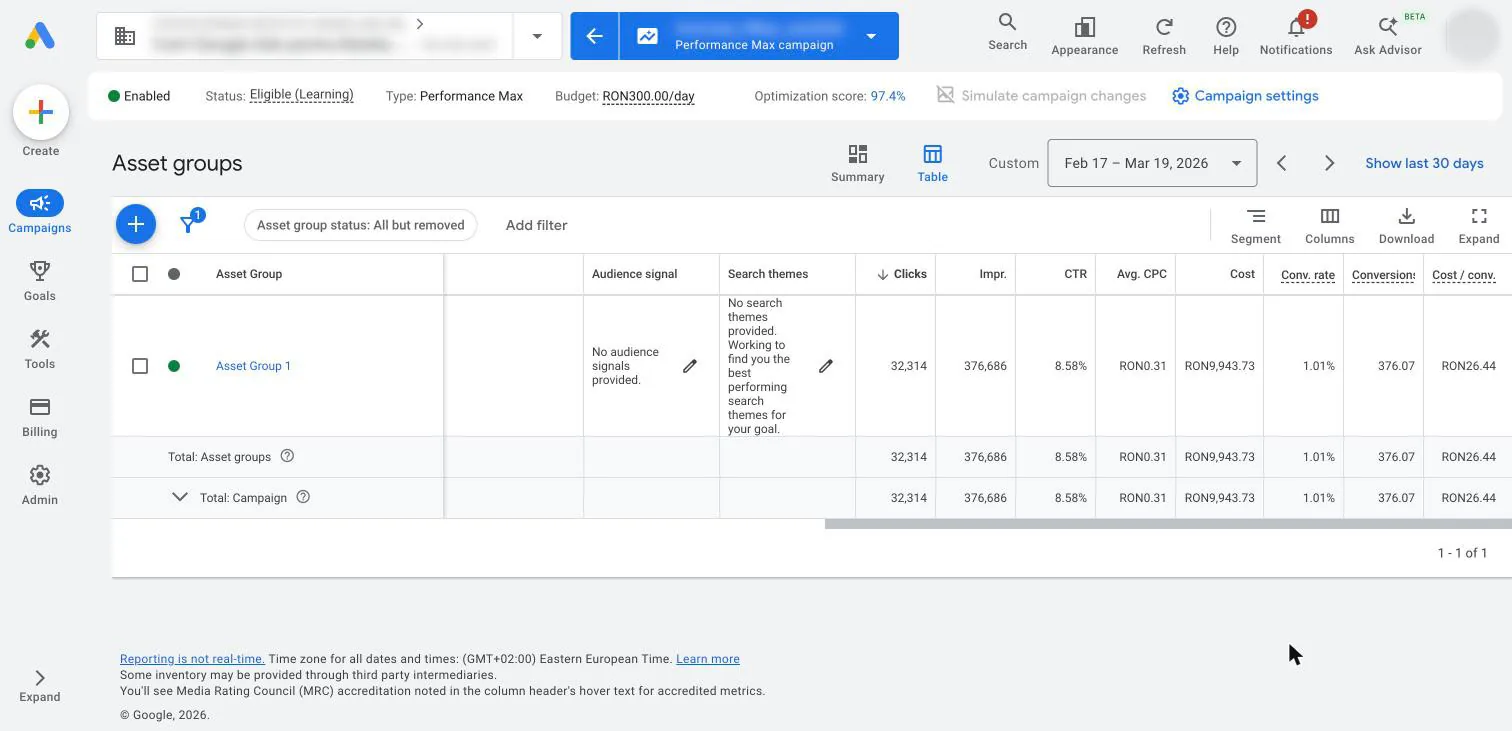
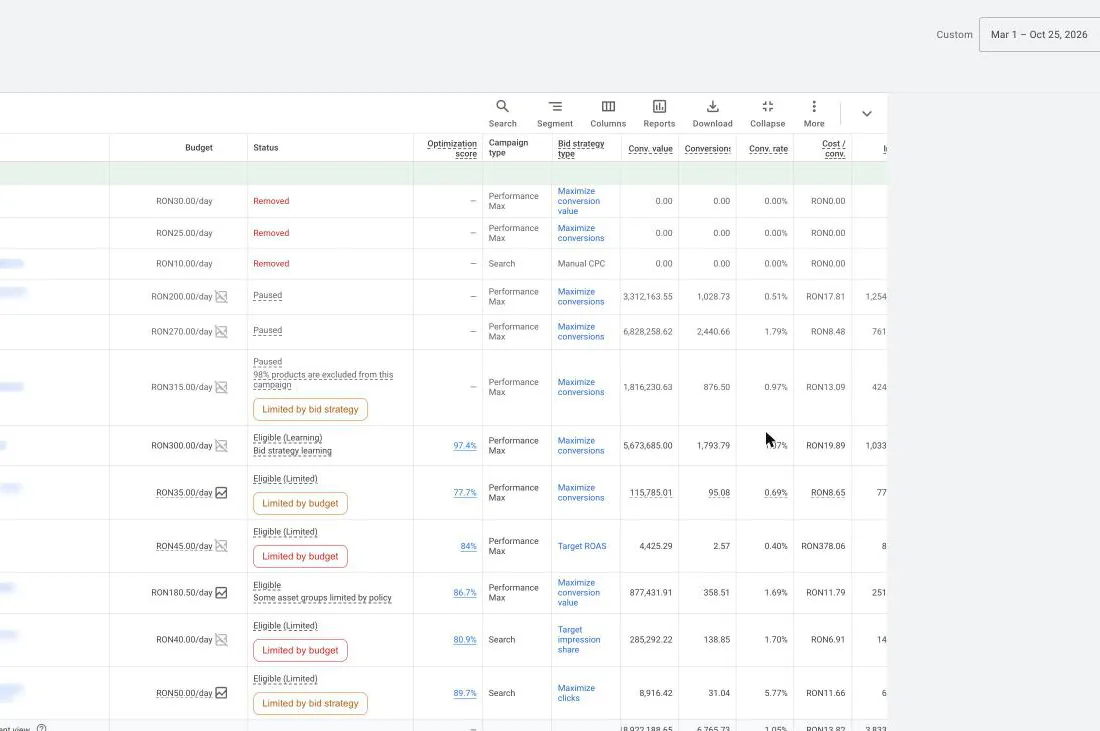
Well, the account said otherwise. From February 17 to March 19, almost all the Google money went through a single campaign, with a single ad group for every product. (An ad group is the part of a campaign that holds its ads and its products.)
That meant Google decided on its own which scooter to show, and to whom. We had no way to push the money toward the models that sell.
There was more. Google shows products from a product feed, which gets updated from the store. And that feed didn't match the site.
- One model showed up in Google with the year and top speed of the model before it.
- Another was listed as out of stock, even though the site had it in stock.
- On the site, the same model's top speed appeared three different ways, in different places.
We sent the list to the owner to fix, since the feed is edited in his store.
What we launched
Campaigns by product type and by buying stage
The first change was telling Google which product to show and to whom.
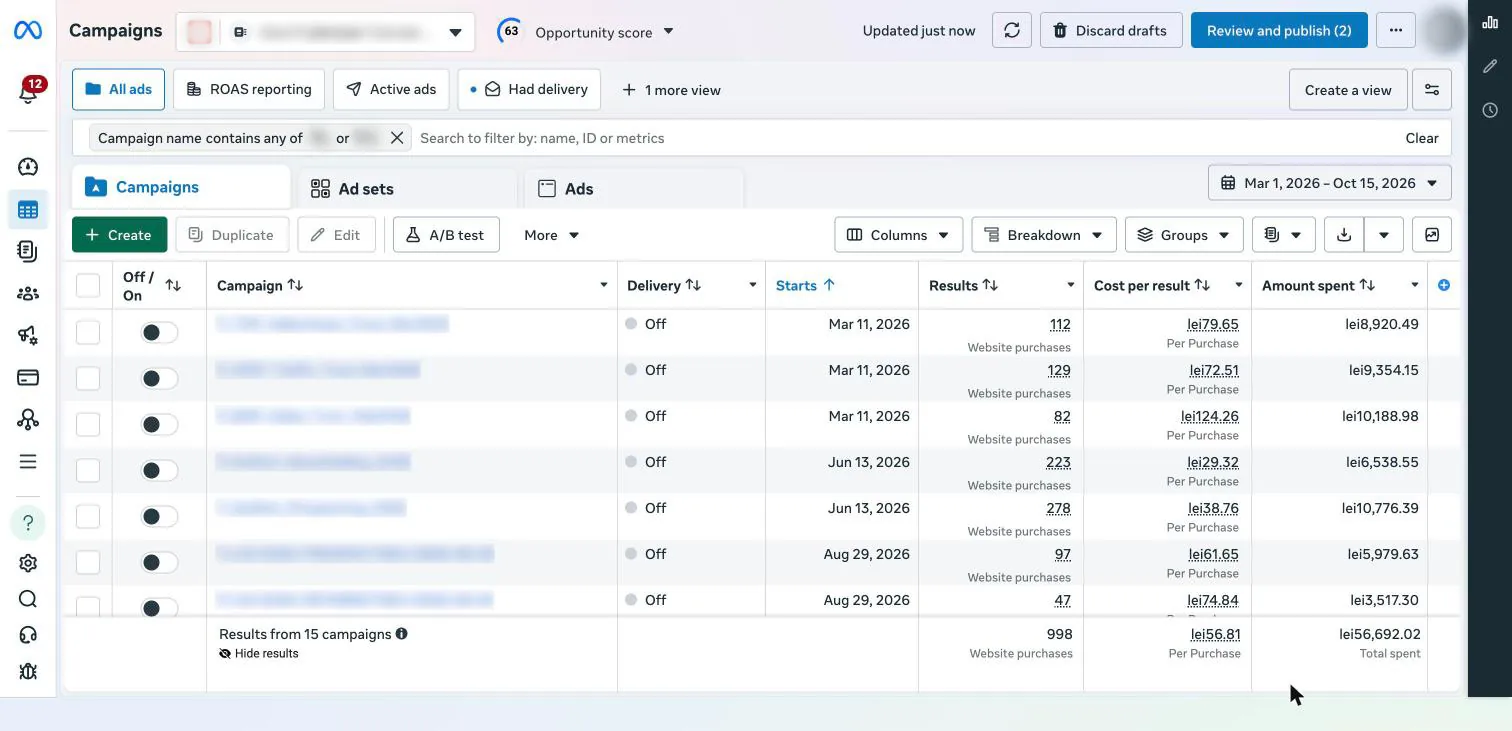
In March, next to the old campaign, we launched a new one split by product type: the best sellers, the budget models, and the powerful off-road ones. On Facebook and Instagram we built three campaigns for three stages: people who didn't know the store, people who'd seen it, and people who'd almost bought. All of them optimized for purchases.
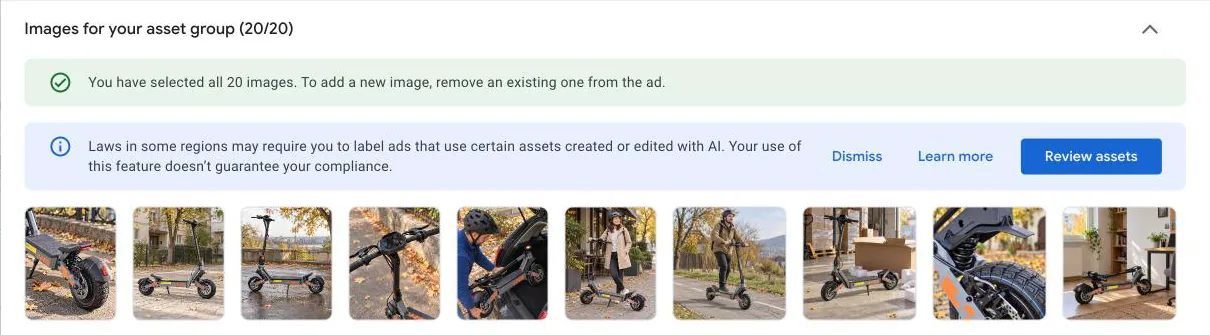
In June, the owner decided to promote a single brand. We made 40 new images around 8 ideas, with AI, starting from real product photos. The ideas weren't gut calls. We started from what had already worked in the account: the best-selling model, the warranty, and the scooter as a gift for kids.
On Google we set up a campaign with groups by price and by power and moved the money to it. From July through September, the old campaign didn't spend a cent. On Facebook and Instagram, two new campaigns went live on June 13.
What we launched, month by month
- March
- Googlea new campaign across three product types
- Facebook and Instagramthree campaigns, one per buying stage
- Reportthe first 30-day report
- June
- Creative40 images around 8 ideas
- Googlea campaign by price and by power
- Facebook and Instagramtwo new campaigns
- August
- Googlea campaign for the new model, with four groups
- Facebook and Instagramtwo campaigns, without the “parents” audience
- Reportmonthly reports from here on
- October
- Googlea campaign for the whole lineup, with 80 images, plus a campaign for brand searches
- Facebook and Instagramseven campaigns, three of them with video ads
The “parents” audience
The “parents” audience cost more than three times as much
The second obvious move came straight from what had worked. The scooter as a gift for kids had done well in the images, so an audience of parents looked like the obvious choice. (The audience is the group of people Facebook shows the ad to.)
The report for July 28 to August 26 said otherwise. A sale from the “parents” audience cost RON 88.47. One from people who'd visited the site in the past week cost RON 26.41.
These numbers are at the ad set level. Put simply, the ad set is the part of the account that holds the audience and its budget.
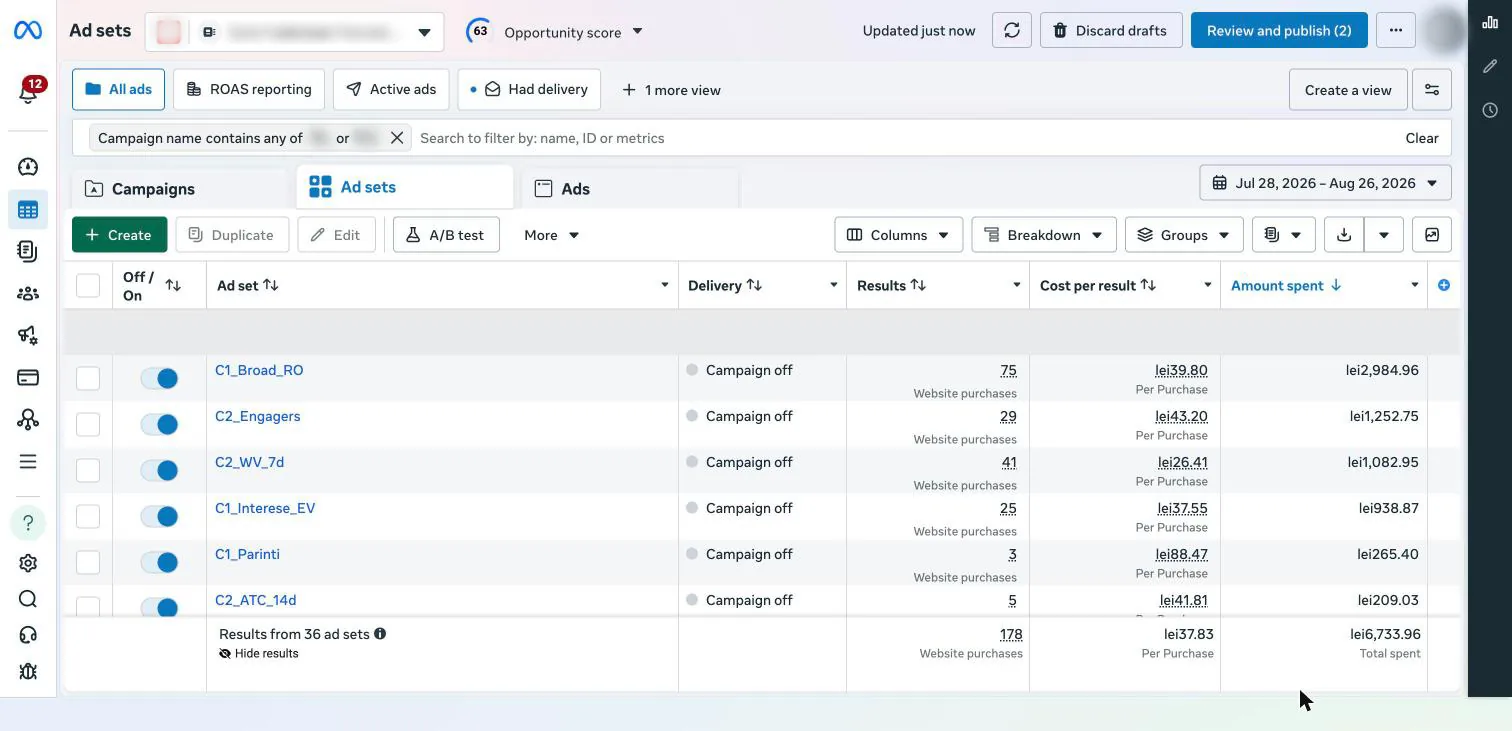
So we left the “parents” audience out of the new campaigns in August.
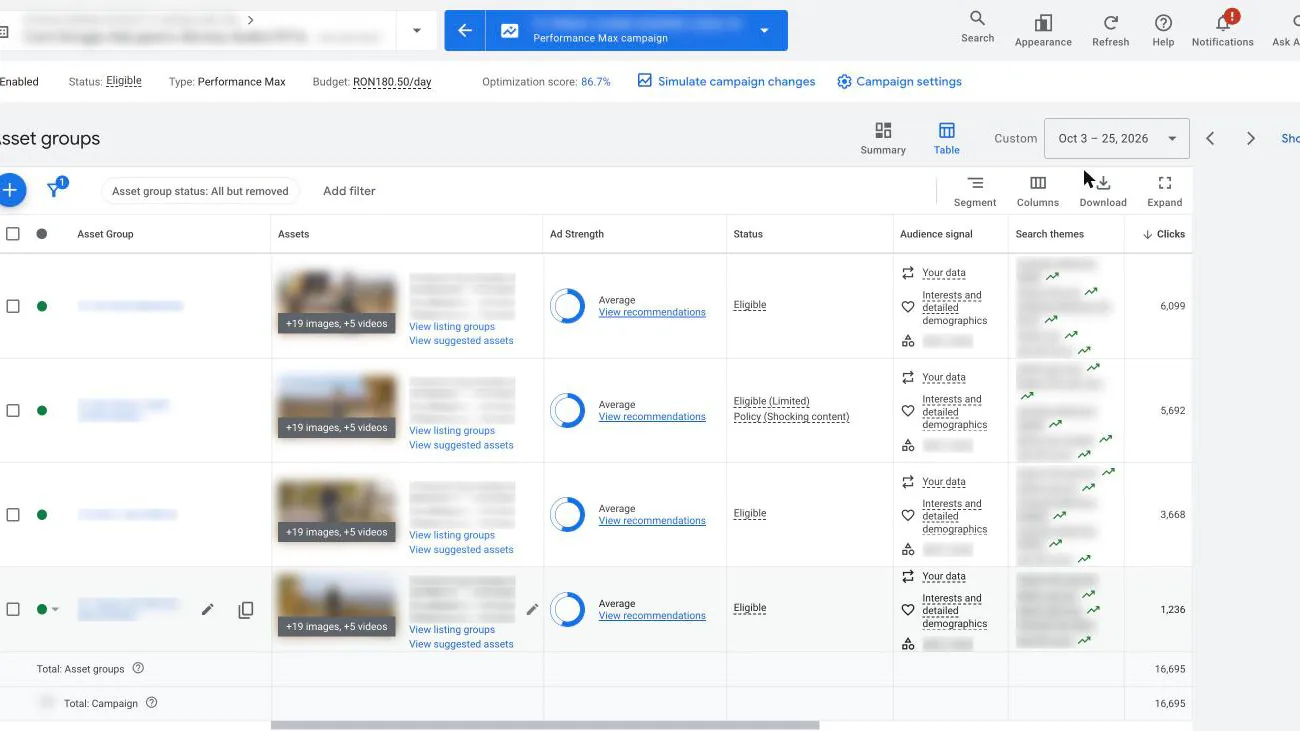
Around the same time, the store got a big shipment of the new version of the best-selling model. We gave it its own Google campaign, with four ad groups built around why people buy it: speed, price, the daily commute, and rough terrain. Each group got 20 images and 5 videos from the store's YouTube channel. For the top speed, out of the three versions on the site, we used the number in the product's official name.
In October, we rebuilt the Facebook campaigns for fall, starting from the June ones. One of them had the lowest cost per purchase of any campaign, RON 29.32. (At the ad set level, the cheapest was still the one for the past week's site visitors.) We brought back the videos that had worked then, with new copy written the way the owner talks. People who'd visited the site in the past week got their own campaign.
On Google we built a campaign for the whole lineup, with 80 new images, 20 for each of the four groups, and a separate one for people searching for the store by name.
The ad schedule
Why the ads stayed on around the clock
The third obvious move came from the owner, in October: run the Google ads only from 2 pm to 11 pm. Makes sense. Why pay for ads at 3 am?
Before changing anything, we looked at the account for September 5 to October 4.
Google had purchases in every hour of the day. From midnight to 7 am it spent 4.9% of the money, and those hours brought in 4.9% of the sales. From 2 pm to 6 pm it spent 31% and brought in 37% of the sales. In other words, Google was already putting more money into the good hours on its own.
How much of the budget Google spent in each hour
12 am to 7 am: 4.9% of spend, 4.9% of sales2 pm to 6 pm: 31% of spend, 37% of sales
And overnight is only part of it. The proposal would have shut the ads off from 11 pm to 2 pm, so the whole morning too. In those hours Google spent about 38% of the money in total: 0.7% at 11 pm, 4.9% overnight, and 32.8% from 7 am to 2 pm. The sales that came in during those hours would have gone with it.
The ads stayed on all day.
Month seven
What each platform counted in month seven
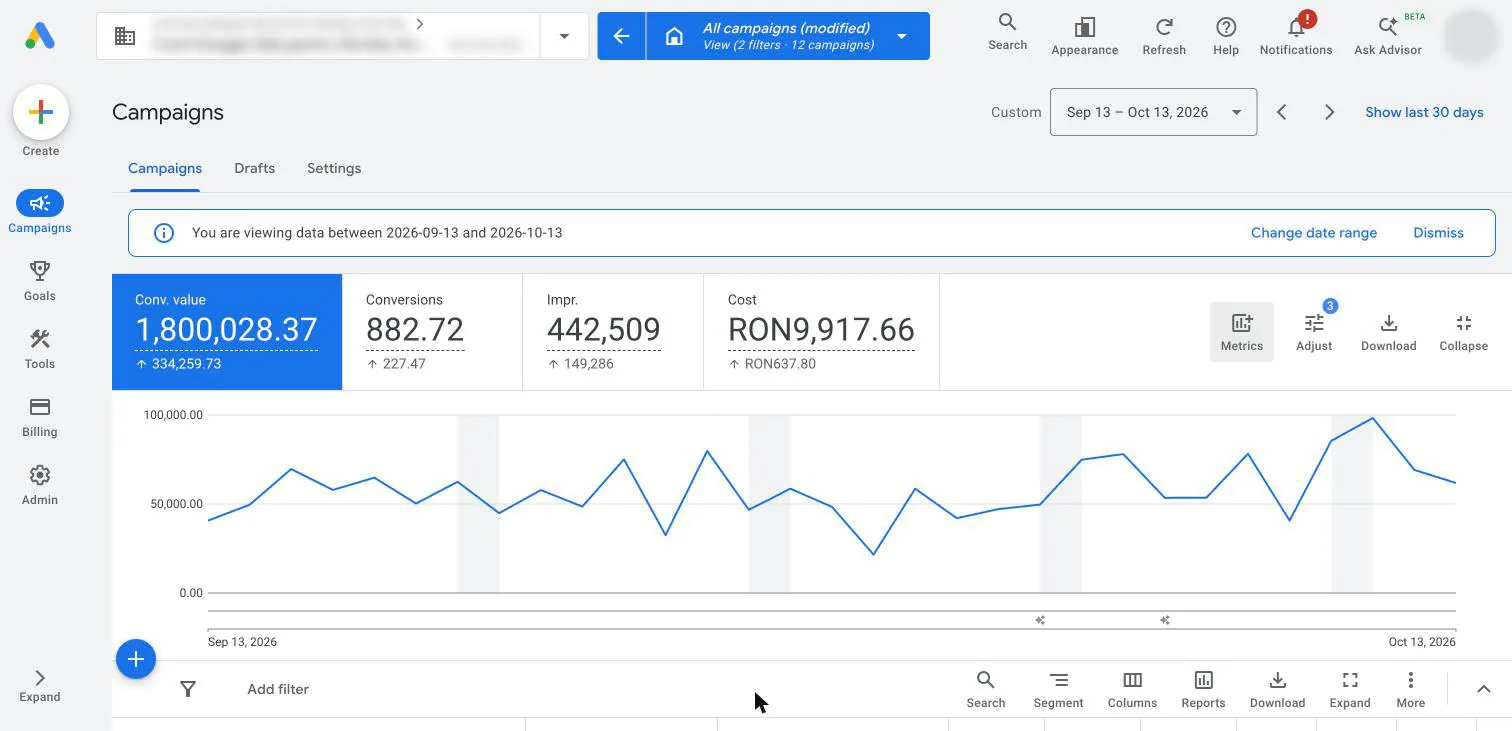
From September 13 to October 13, 2026, Google counted RON 181.50 in sales for every RON 1 spent on ads. A purchase cost RON 11.24, about $2.34. The purchase count has decimals because Google splits a sale between the ads that led to it.
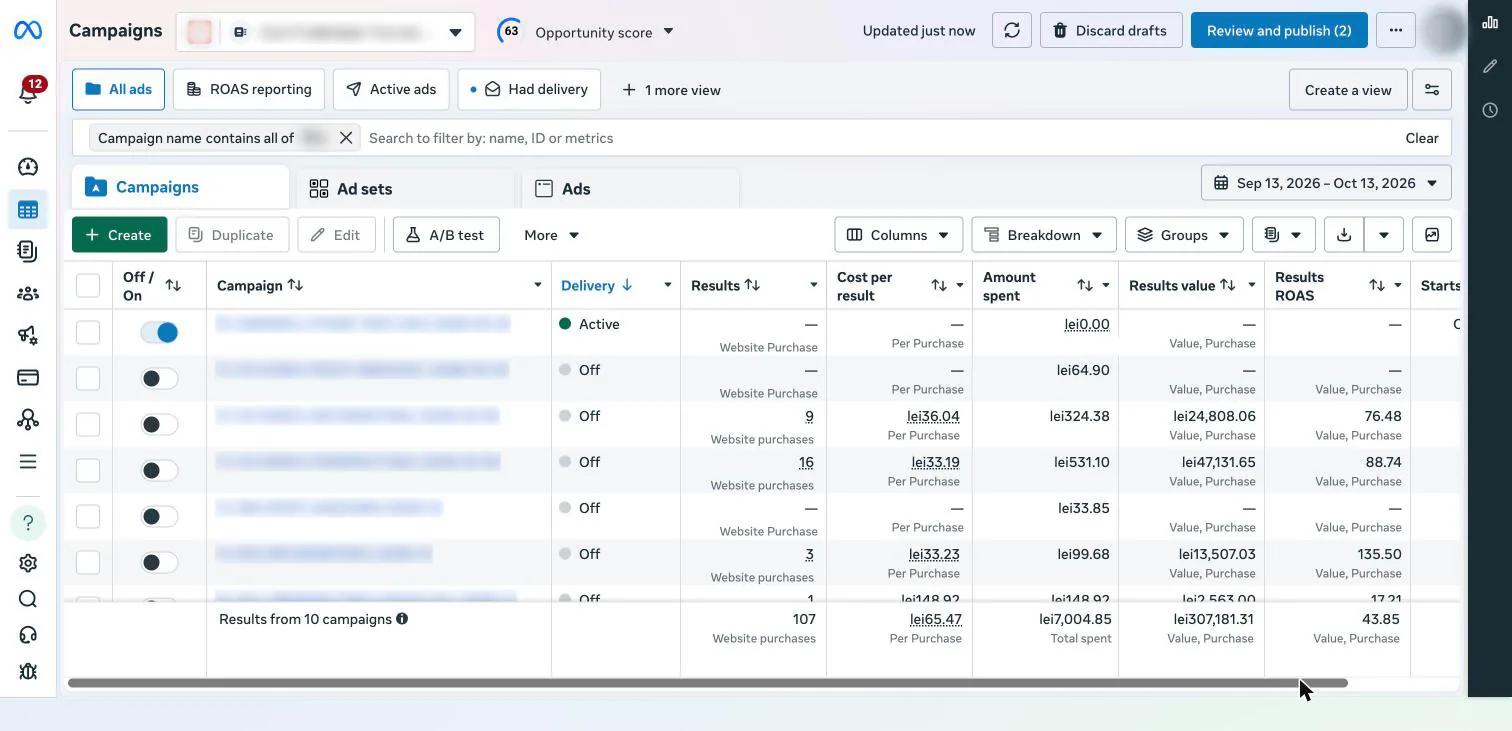
In the same month, Facebook and Instagram counted 107 purchases at RON 65.47 each (about $13.66), which works out to RON 43.85 in sales for every RON 1.
We checked the account numbers against the store's actual revenue for the same month, and the sales were real.
Two honest caveats go with these numbers.
First, the two platforms don't add up. Someone can see the ad on Facebook and buy after a Google search, and each platform counts the order as its own. And part of Google's sales come from people who were already searching for the store by name.
Second, a closed month's numbers keep climbing for a while. Google credits a purchase to the day of the click, even if the person buys a few days later. In the report we sent the owner on October 14, the same month had 805 purchases and RON 167 in sales for every RON 1.
Our rule is simple: look at the account first, then change things. Since August, the owner has gotten a monthly report with what each platform spent and what it counted.
For your account
Three questions to ask your account this month
Count your Google campaigns for the whole store. If one of them takes almost all the money, Google picks which product to show and to whom. You can't push the money toward the models that sell.
Put your Google product feed next to your site. Each product's title, price, and stock status should say the same thing in both places.
Before you turn ads off at certain hours, ask the account. How much of the budget goes out in those hours, and what sales do they bring in? At the scooter store, the hours on the chopping block took about 38% of the money.