

The store
Lots of visitors from Google, too few buyers
The client is an online store for digital video games for consoles (PlayStation, Xbox) and PC. It sells in Europe and the US.
When we started, the store already had lots of visitors coming in from Google search without paying for ads. The problem: too few of them bought.
In other words, people landed on the site, browsed the games, and left. So we asked what stops someone right at the moment they have to pay.
The buyer's fear
Why a low price doesn't win over someone who's worried
The answer has to do with how you buy a digital game. You pay first. Only then do you find out whether you get a game key that works and whether that key stays valid, meaning it doesn't get revoked later.
People who buy digital games have heard stories about someone who paid and never got the game. So on a site they don't know, they check twice.
The temptation is to lead with the low price. But a low price doesn't reassure someone who's afraid of getting scammed. It makes them even more suspicious.
So we gave the ads a different job: show first that the game is verified and that the buyer has a guarantee. The low price comes after. The fear of getting scammed wasn't something to work around. It was what we built the ads around.
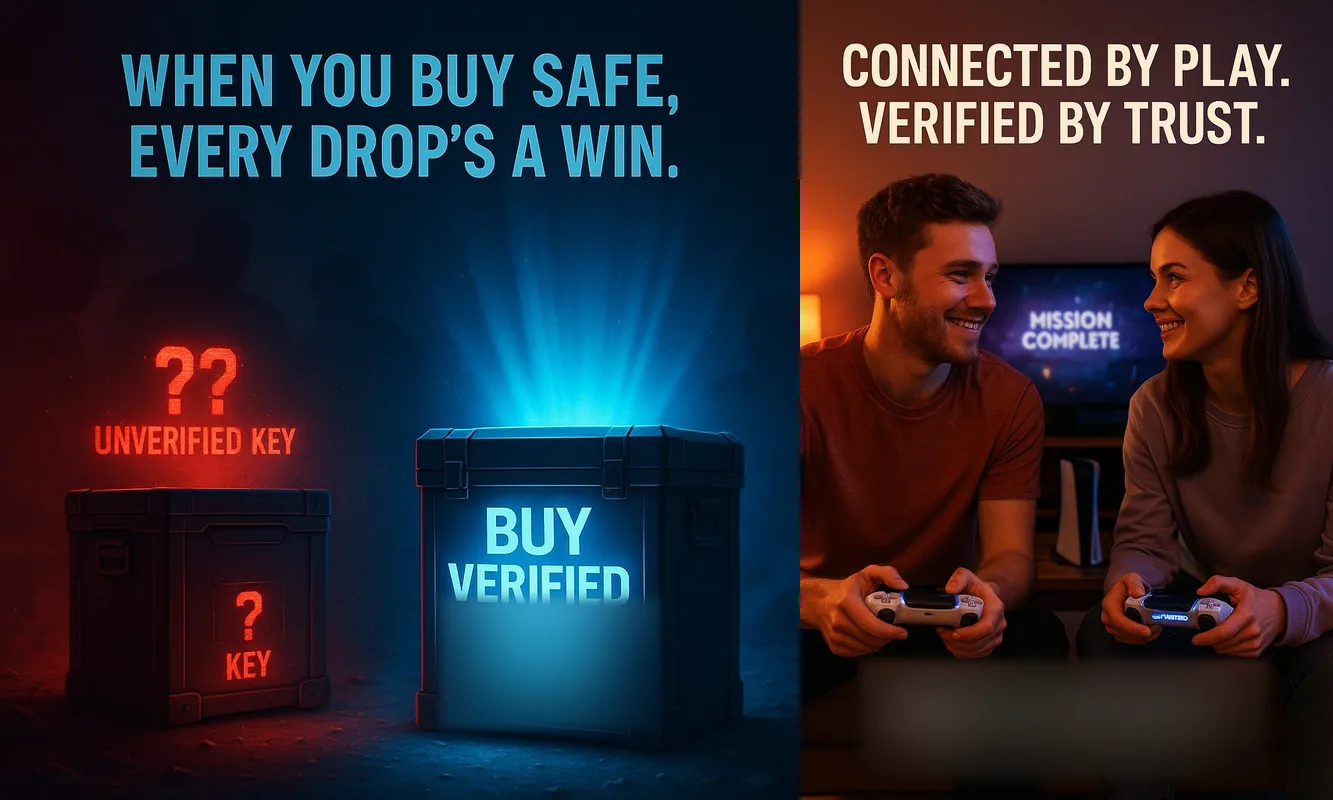
The same theme ran through the content calendar for November: trust. Leading up to Black Friday, the posts explained what you get and why you can trust the store.
Campaigns and budgets
Each country with its own campaigns and budget from day one
We worked in six countries: the UK, France, Germany, Italy, Spain, and the US.
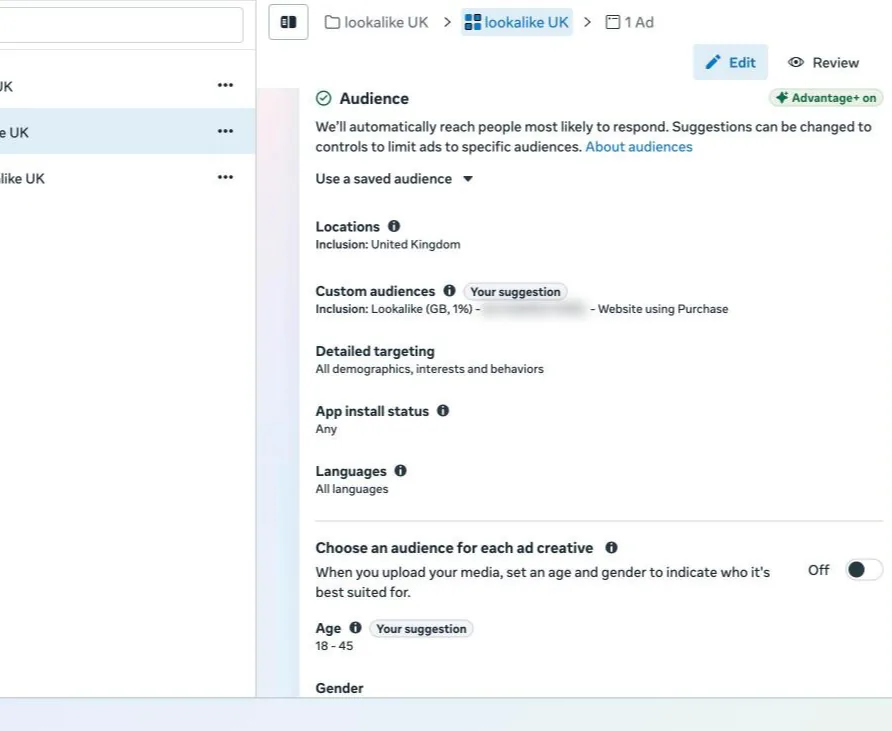
In each country, we ran three campaigns on Facebook and Instagram. The first was for people who didn't know the store. The second used the product catalog, the store's list of games, from which Facebook picks which games to show each person. The third went to a lookalike audience: Facebook looks for people who resemble the ones who'd already bought from the site.
Every ad sends people to the store in the country's language: English, French, German, Italian, or Spanish. We set up the product feed, about 800 games, in three currencies: pounds, dollars, and euros.
The ads ran for six weeks, from October 27 to December 11, 2025. On top of the three campaigns in each country (18), we added separate Halloween and Black Friday campaigns, also by country (12), plus two more for people who didn't know the store, in the UK and the US. That's 32 campaigns in all, each with its own budget.
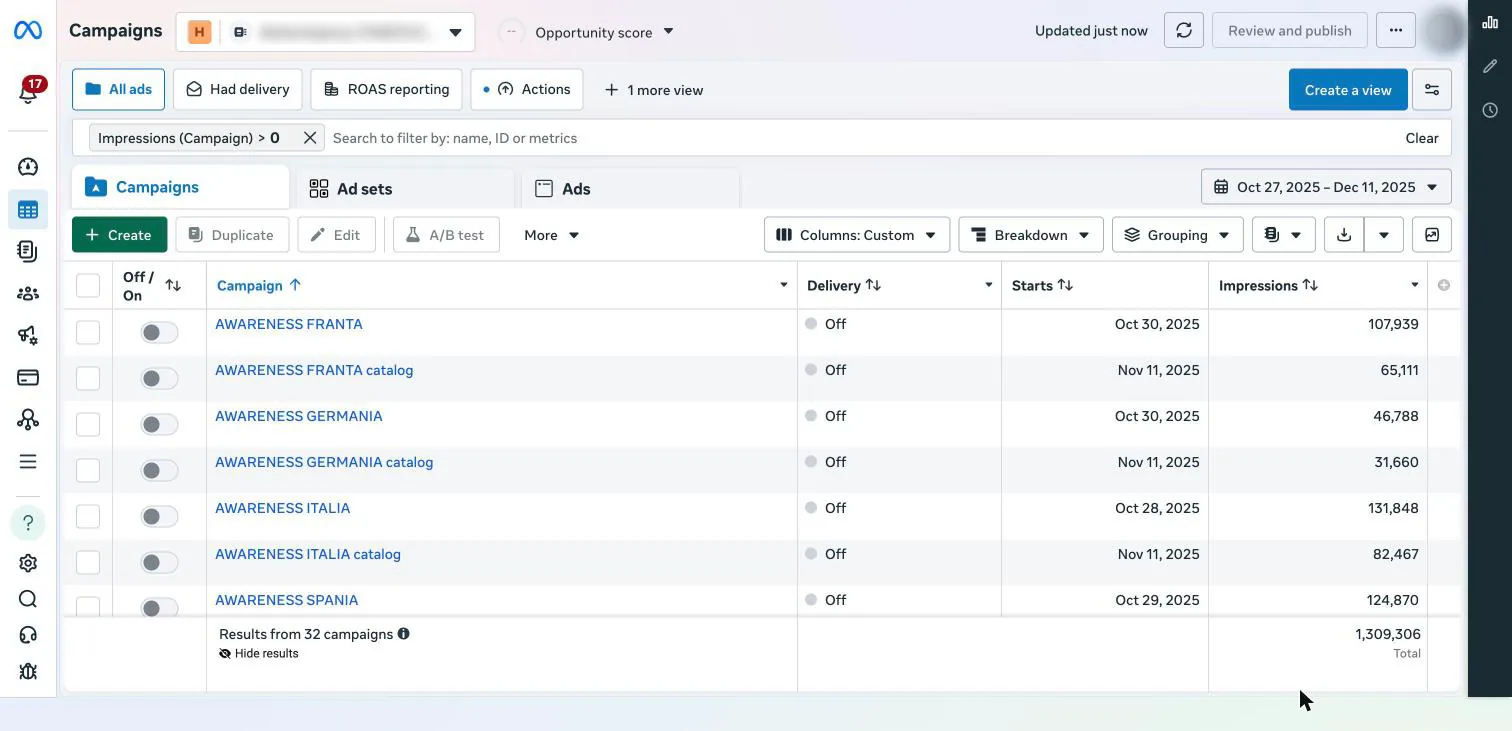
Why not one campaign for every country? It would have been simpler to launch. But we'd have seen a single average, and an average doesn't tell you where things work and where they don't.
Below is the audience of one ad set in the UK. An ad set is the group of ads in a campaign that's shown to the same audience.
What we learned
The same three campaigns, very different results by country
The cheapest sales came from the lookalike audiences in the UK and Spain. A sale cost the most in Germany.
Same account, same three campaigns. And yet the results in Germany were very different from the UK and Spain.
Because each country had its own campaigns and budget, the difference showed up country by country. In one shared campaign, the average would have hidden it. Say you'd seen an average cost per sale that looked fine. You wouldn't have known that behind it were countries where sales were cheap and one where they were expensive.
We're not publishing the store's sales numbers here. What we can show you is what you saw above: how we built the ads around the buyer's fear, and what splitting the money by country told us.
For your business
Two things to do in your account this month
If you sell in more than one country, give each country its own campaigns and budget. The average across all countries hides where things work and where they don't.
If people are wary of buying from a store they don't know, answer that worry first. Show what they get and what guarantee they have. The price comes after.